⚡ VoltSens Verified Automotive Research & Analysis
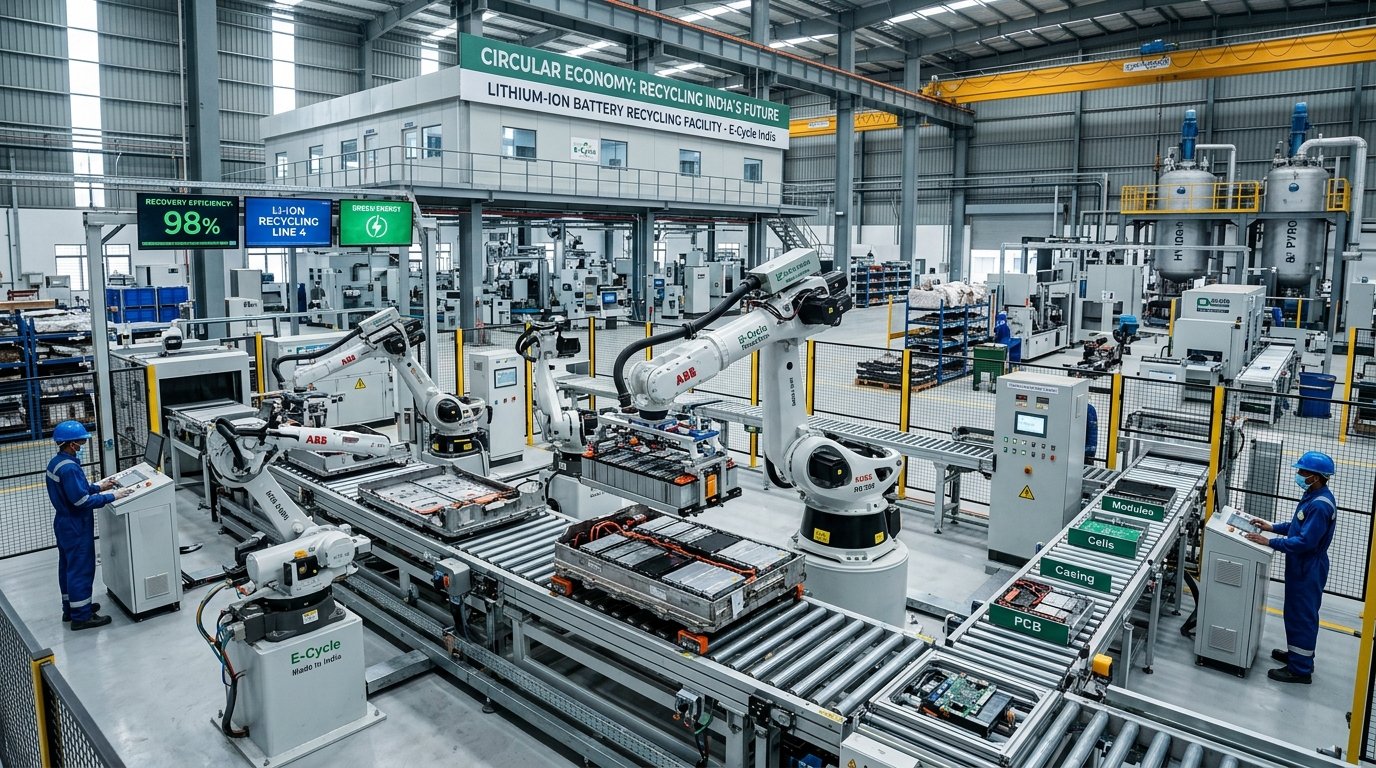
A common myth is that discarded EV batteries end up in landfills. In reality, modern lithium-ion EV batteries enter a high-value circular ecosystem: first serving as stationary solar energy storage for 8-10 years, and then being hydrometallurgically recycled with 98% metal recovery.
The 2-Phase Lifecycle of an EV Battery
Phase 1 (Vehicular Use - 8 to 10 Years): Delivers high peak power for driving until capacity reaches ~70-75% State of Health.
Phase 2 (Stationary Grid & Solar Storage - 7 to 10 Years): Re-purposed as home backup batteries or solar farm storage banks where weight and rapid discharge are not critical.
Recycling Recovery Rates in India
Indian recycling leaders (Lohum, Attero, Tata Chemicals) extract pure battery-grade Lithium (95%+), Cobalt (98%), Nickel (98%), and Copper (99%), creating raw materials for brand-new EV cells.
Frequently Asked Questions (FAQ)
What is the main topic covered in this article about Battery Tech?
When an EV battery degrades to 70% capacity, it is far from dead. Here is how Indian recycling gigafactories and solar energy storage give old batteries a 15-year second life.
How does this relate to EV running costs in India?
Electric propulsion consistently delivers running costs between Rs 0.30/km and Rs 0.50/km for scooters and Rs 0.80/km to Rs 1.20/km for cars, representing an 80%+ savings over fossil fuels.
Where can I find more Battery Tech guides on VoltSens?
VoltSens has 40+ comprehensive guides across EV Cars, Scooters, Battery Tech, and Charging categories. Visit our Battery Tech category page for related in-depth articles.