⚡ VoltSens Verified Automotive Research & Analysis
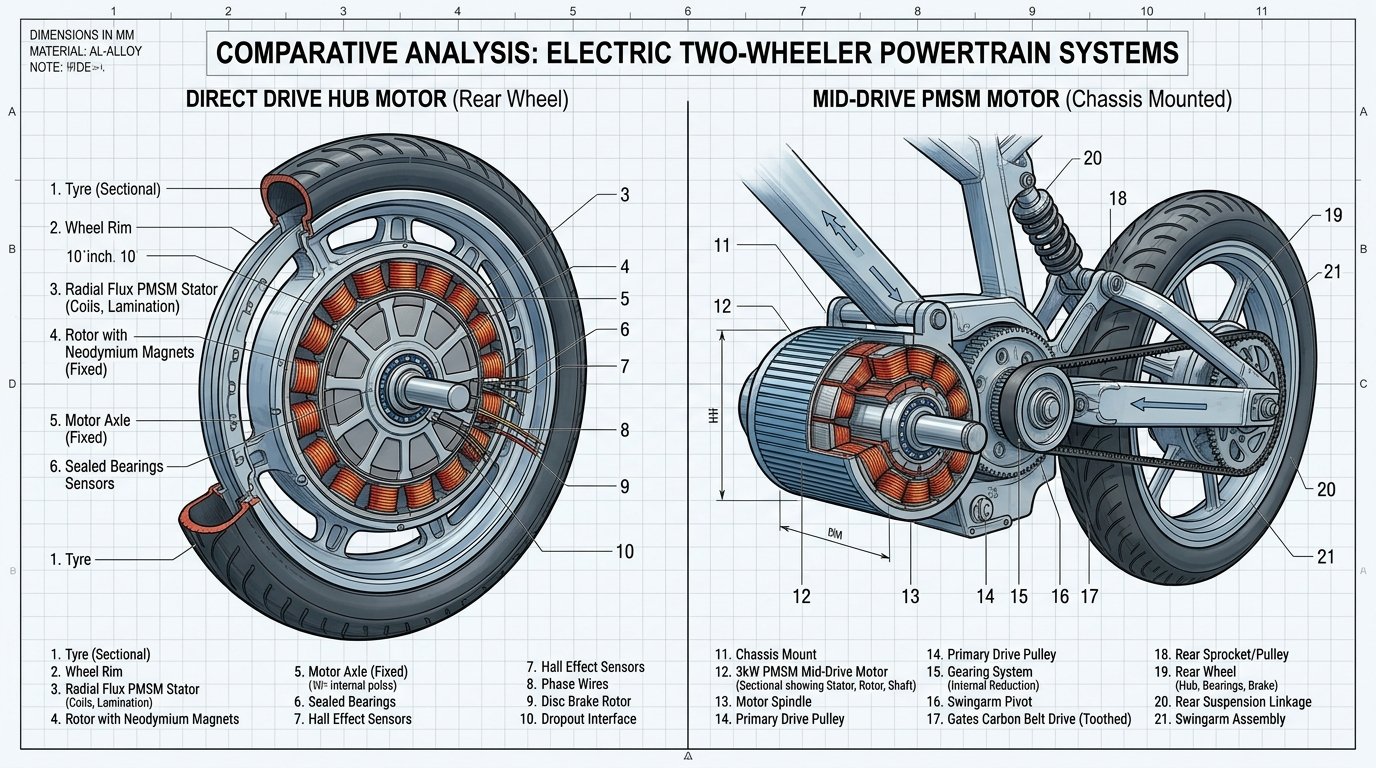
When shopping for an electric scooter, you will notice two distinct powertrain designs: motors built directly inside the rear wheel (Hub Motor, used in Ola S1 X, TVS iQube, Chetak) vs motors mounted in the center frame connected by a belt (Mid-Drive Motor, used in Ather 450X, Ola S1 Pro).
Head-to-Head Comparison Table
| Feature | Hub Motor (Rear Wheel) | Mid-Drive Motor (Center Frame) |
|---|---|---|
| Cost | Lower (Affordable scooters) | Higher (Premium scooters) |
| Weight Distribution | Rear-heavy | 50:50 Perfect Balance |
| Hill Climbing Torque | Moderate | Superior (Gear reduction) |
| Pothole Shock Durability | Motor absorbs direct road hits | Motor protected inside frame |
| Rear Tyre Puncture Repair | Complex (Heavy wiring harness) | Easy (Standard wheel removal) |
| Maintenance | Zero belt/chain maintenance | Requires belt replacement every 25,000 km |
Frequently Asked Questions (FAQ)
What is the main topic covered in this article about Battery Tech?
Rear wheel hub motor vs center-mounted belt/chain mid-drive motor — compare torque, hill climbing ability, pothole durability, and maintenance costs.
How does this relate to EV running costs in India?
Electric propulsion consistently delivers running costs between Rs 0.30/km and Rs 0.50/km for scooters and Rs 0.80/km to Rs 1.20/km for cars, representing an 80%+ savings over fossil fuels.
Where can I find more Battery Tech guides on VoltSens?
VoltSens has 40+ comprehensive guides across EV Cars, Scooters, Battery Tech, and Charging categories. Visit our Battery Tech category page for related in-depth articles.